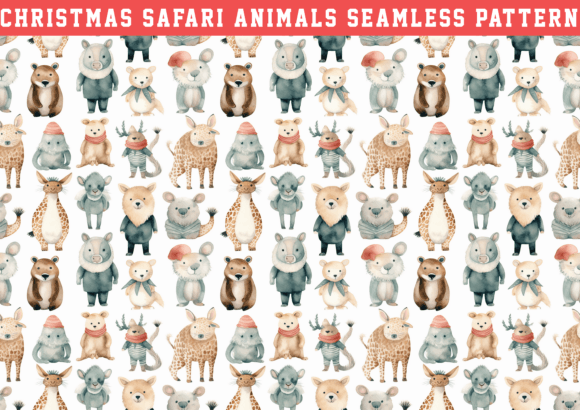
Christmas Safari Animal Pattern: Graphics & Patterns
First Impression: Festive, Whimsical, and Unexpectedly Sophisticated
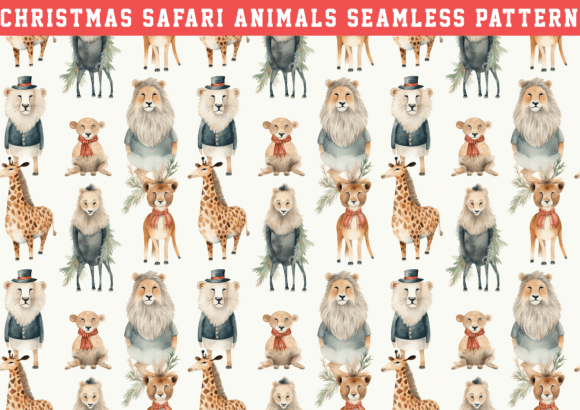
When I opened the Christmas Safari Animal Pattern for the first time—reviewing it for a local artisanal candle brand launching a holiday “Jungle Noel” collection—I was struck by its confident balance of warmth and playfulness. It’s not your typical red-and-green reindeer motif. Instead, it layers stylized elephants, lions, and giraffes with subtle holly sprigs, snow-dusted palm fronds, and soft gold foil accents—all wrapped in a rhythmic, seamless repeat. The mood? Joyful but grounded. Festive without being frantic. Handmade charm meets intentional design discipline. For small business branding, this pattern suggests a brand that’s creative, confident in its storytelling, and deeply attuned to emotional resonance—not just seasonal decoration.
Real-World Use Cases: From Packaging to Promotional Polish
You will receive 1 Zip file containing an individual JPG file—this is a DIGITAL file, no physical item sent. High resolution (2000x2000px at 300 DPI), clean, and ready for commercial design work. That means it’s immediately applicable across real local business touchpoints: product labels for soy wax candles, die-cut hang tags for handmade soap bundles, foil-stamped accents on kraft gift boxes, full-bleed banners for boutique window displays, and even custom-printed thank-you cards tucked into online orders.
For the candle brand I’m designing for, we’re using the Christmas Safari Animal Pattern as a secondary brand element—layered behind hand-lettered product names on matte-finish jar labels, scaled down for sticker seals on shipping mailers, and enlarged as a hero graphic behind Instagram Reels showing candle-making process shots. It’s also anchoring our holiday menu board at the café pop-up inside the shop—printed on premium paper stock with spot UV gloss on the animal silhouettes for tactile contrast.
Where This Graphic Design Asset Builds Brand Strength
- Stronger first impression: Shelves, social feeds, and storefronts are saturated—this pattern cuts through with distinctive personality while feeling cohesive, not chaotic.
- Better product recognition: When repeated across jars, tags, and digital ads, it becomes an intuitive visual cue—customers begin associating the rhythm of the animals with your brand’s holiday offering.
- Clearer visual hierarchy: Used as a background or border, it frames primary messaging without competing—especially when paired with bold sans-serif typography or elegant serif body copy.
- More consistent brand identity: As a flexible, scalable graphic design asset, it unifies everything from email headers to printable inserts in gift boxes—no need to reinvent visuals per channel.
- Improved customer trust: Professional packaging design signals care and credibility. A high-res, thoughtfully composed pattern like this tells customers you invest in presentation—not just product.
Best Fit: Contexts Where Christmas Safari Animal Pattern Shines
This pattern excels where warmth, narrative, and decorative intention matter most: seasonal packaging for food businesses (think gingerbread cookie tins or hot cocoa mix bags), boutique visuals for children’s clothing lines or toy shops, product mockups for Etsy sellers, social media graphics announcing limited-edition drops, and editorial-style printables for local florists bundling holiday wreath kits. It works beautifully as a decorative brand element—think border motifs on price lists, subtle watermark textures behind website banners, or full-coverage backdrops for holiday popup signage.
Use With Intention: Situations That Demand Careful Integration
While versatile, Christmas Safari Animal Pattern isn’t universally plug-and-play. Avoid dropping it onto formal corporate branding systems—its joyful energy clashes with ultra-minimalist or luxury-neutral aesthetics. It’s also not ideal for very small labels (under 2" x 2") where detail blurs or legibility suffers. On ingredient-heavy layouts—like USDA-compliant food labels—reserve it for non-regulatory zones only. And never place it over low-contrast backgrounds (e.g., light tan on cream) without testing print output first. If your brand voice leans starkly modern or monochromatic, this pattern may compete rather than complement.
Practical Brand Designer Notes You Can’t Skip
Before locking in Christmas Safari Animal Pattern for client work or your own small business branding, run these checks:
- Test it on real packaging mockups—print a 3" x 3" swatch on your actual label stock to assess color fidelity and scale.
- Check black-and-white usage: convert to grayscale to confirm contrast holds for accessibility and monochrome printing.
- Preview it on small labels—even at 300 DPI, fine details can vanish at tiny sizes.
- Test it with your brand colors: overlay it against your primary palette to ensure harmony, not visual noise.
- Compare it side-by-side with competitor packaging—does it stand out *strategically*, not just decoratively?
- Verify print quality: request a physical proof if ordering bulk packaging—digital previews lie.
- Confirm commercial licensing: this is essential for any physical product sales, client deliverables, or resale contexts.
- Test typography pairings: try it beside serif fonts (for elegance), sans serifs (for clarity), script fonts (for handmade warmth), and display fonts (for campaign impact).
Final Thought: A Strategic Asset, Not Just Seasonal Clipart
Christmas Safari Animal Pattern isn’t clipart—it’s a considered graphic design asset with narrative weight and functional flexibility. For local business owners, handmade sellers, and creative entrepreneurs, it’s a rare find: festive enough for December, distinctive enough to build recognition, and professional enough to elevate every customer touchpoint. Whether you’re designing coffee bag labels for a neighborhood roaster, wrapping kits for a home decor shop, or building a cohesive holiday campaign for a skincare line, this pattern delivers more than decoration—it delivers brand continuity, emotional connection, and quiet confidence in your visual storytelling. Just remember: great patterns don’t replace strategy—they amplify it.