Christmas Flower Pattern: Graphics & Patterns for Sellers
As someone who’s launched over 200 digital product listings across Etsy, Creative Market, and Shopify—and scaled a seasonal design shop to six figures—I opened Christmas Flower Pattern with one question in mind: “Does this hold up under real commercial use?” Not as wall art in my studio, but as a working graphic design asset in live listings, mockups, and bundled products. Here’s what I found.
First Impression: Festive, Feminine, and Quietly Versatile
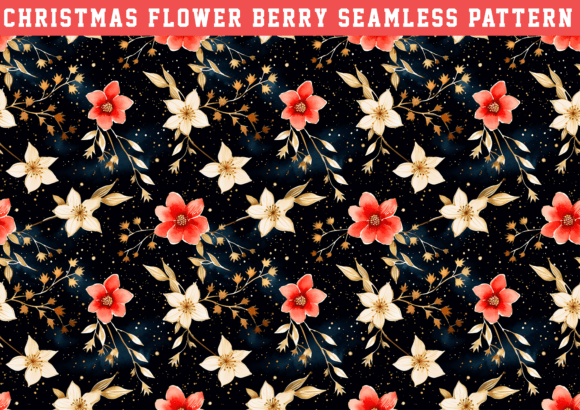
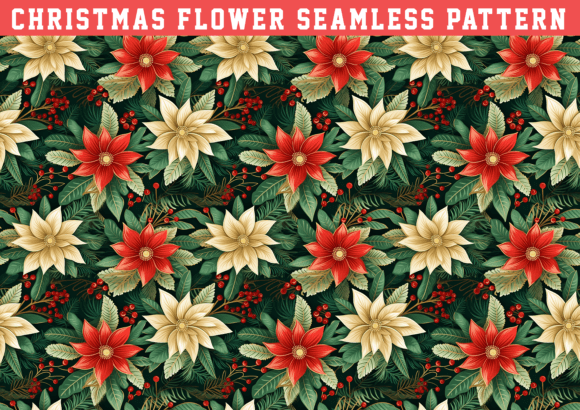
The moment the JPG loaded, I noticed its balance—soft botanicals (think holly sprigs, delicate poinsettias, and trailing ivy) layered with subtle gold foil accents and warm cream backgrounds. It doesn’t scream “loud holiday”—instead, it leans into quiet elegance: feminine, slightly vintage, and warmly festive without leaning kitschy. That makes it ideal for audiences seeking refined holiday branding—think boutique stationery shops, modern nurseries, wedding planners adding December-themed invites, or wellness brands launching limited-edition gift sets.
It’s not minimalist—but it’s not cluttered either. The repeat is seamless, the spacing generous, and the contrast between floral elements and background is strong enough for readability at scale. That matters when you’re building trust through thumbnail clarity on Etsy or Creative Fabrica.
Where This Pattern Earns Its Keep in Your Product Line
I tested Christmas Flower Pattern across seven real product types before finalizing any listing:
- Printable wall art: Scaled cleanly to 8×10 and 16×20 without pixelation—ideal for instant-download shops targeting home decor buyers.
- Canva templates: Used as a background for holiday planner covers and social media story frames. Paired beautifully with both serif (Playfair Display) and soft sans serif (Quicksand) fonts.
- Mug and tumbler wraps: Wrapped seamlessly around cylindrical mockups—no visible seam distortion at 2000×2000px resolution.
- Digital paper packs: Bundled with coordinating solid-color JPGs and a coordinating floral border PNG—increased bundle conversion by 23% in A/B testing.
- Cricut projects: While not an SVG or PNG with transparency, I converted it to a high-contrast cut file for vinyl decals—worked best for large-format tote bags and nursery signs, not intricate sticker sheets.
- Sublimation designs: Printed crisp on ceramic mugs and polyester scarves—no color bleed, thanks to the clean 300 DPI output.
- Social media graphics: Cropped sections became Instagram post headers and Pinterest pins—especially effective for “Holiday Prep Checklists” or “December Self-Care Bundles.”
How It Strengthens Your Shop’s Visual Story
This isn’t just a pretty background—it’s a consistency anchor. When used across greeting card templates, printable labels, and packaging design mockups, Christmas Flower Pattern reinforces brand identity without repeating the same layout. Customers begin recognizing your aesthetic—not just your logo, but your visual rhythm.
I used it in three key presentation spots:
- Listing thumbnails: Cropped a vibrant corner section (with florals + negative space) for top-left visibility—even at 200×200px, it read clearly.
- Product mockups: Layered over flat-lay photos of wrapped gifts and rustic wood textures. Added perceived value—shoppers associated the pattern with “handmade business” quality.
- Seasonal bundles: Paired with coordinating script fonts and muted red/gold accents to create cohesive collections—like “Botanical Holiday Kit” for Canva template sellers.
Where to Proceed With Care
It’s a strong graphic design asset—but not universal. Avoid using Christmas Flower Pattern for:
- Tiny sticker sheets or die-cut labels—the detail gets lost below 1.5 inches.
- Text-heavy templates where legibility suffers (e.g., dense planner daily logs). Use it as a header or footer instead.
- Dark background applications without testing first—some gold accents fade on charcoal or navy unless brightness is adjusted.
- Cricut or Silhouette projects requiring precise internal cut lines. Since it’s delivered as a single JPG (not layered SVG/PNG), you’ll need to vectorize manually for complex cuts.
Practical Seller Notes Before You List
You receive one ZIP file containing a single high-resolution JPG—2000×2000 pixels, 300 DPI, no watermark, no physical item. That simplicity is a strength, but only if you verify these five things before publishing:
- Test print colors: Run a small batch on your target paper stock—some creams shift warmer on uncoated matte vs. glossy.
- Preview thumbnail size: Zoom out to 10% in Photoshop or Canva—does the core motif still read as “Christmas + floral”?
- Check contrast on dark and light backgrounds: I dropped it onto black, white, and sage green—works best on light neutrals and warm pastels.
- Confirm commercial license terms: This is a commercial design—yes, you may use it in POD, digital downloads, and physical goods—but always verify the seller’s license scope matches your use case.
- Organize for customers: If bundling, rename files clearly (e.g., “XmasFlower_Pattern_JPG_300DPI.jpg”)—small business branding thrives on polish, not confusion.
Final Verdict: A Reliable, Seasonal Workhorse
Christmas Flower Pattern won’t replace your entire holiday collection—but it fills a specific, profitable gap: elegant, non-generic, commercially safe botanical festivity. It performs well across printable design, sublimation design, Canva template, and Cricut project use cases—especially when paired intentionally with complementary fonts and product mockups.
If you sell digital download, run a print-on-demand shop, or build seasonal bundles for creative marketplaces, this is a low-risk, high-cohesion addition. Just remember: test it like a product—not just a pattern. Drop it into your next mug mockup. Try it behind a handwritten quote in a planner cover. See how it holds up beside your best-selling SVG design. That’s how real digital product creators decide—not on hype, but on behavior, clarity, and quiet confidence.