Christmas Bell Pattern: Graphics & Patterns
When I unzipped the folder and saw the single JPG file, my first thought was how many different ways this could fit into a seasonal digital product collection. The file is a 2000x2000 pixel graphic at 300 DPI, no watermarks, no surprises—just a clean, ready-to-use Christmas bell pattern that feels equal parts classic and commercial. It’s not a layered SVG or a transparent PNG, so anyone expecting a cut file will need to adjust their workflow. But for a printable design or a background layer, it’s the kind of asset that can quietly elevate a product line without demanding too much extra work.
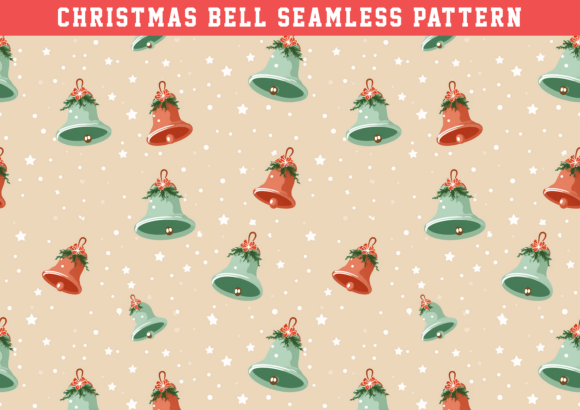
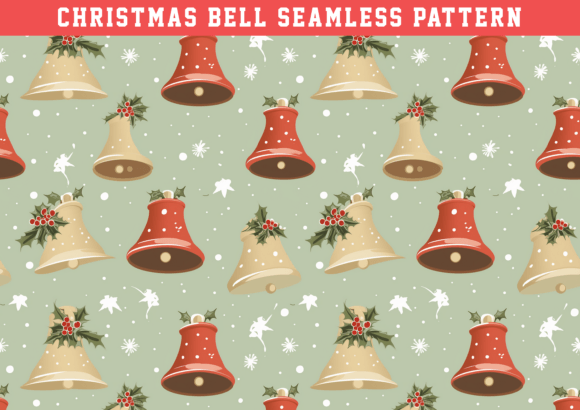
The pattern itself strikes a balance between festive and versatile. The bells repeat in a way that reads as intentional, not chaotic, with a hand-drawn or slightly illustrated feel that would appeal to buyers looking for nostalgic holiday style rather than ultra-modern minimalism. I could see it working for a rustic Christmas bundle, a cozy winter planner, or even a digital paper pack aimed at scrapbookers who want something traditional but not overly childish. The mood is warm, a little vintage, and completely appropriate for a small business owner trying to build a cohesive holiday shop section.
Where a High-Resolution Pattern Like This Adds Real Value
As a digital product creator, I always test a new graphic design asset across multiple mockups before I list anything. With this Christmas bell pattern, I started by dropping it into a sublimation design for a mug and a set of coasters. At 2000x2000px, the resolution held up beautifully on a standard 11oz mug template. I also tried it as a background for a printable wall art piece, pairing it with a simple serif font quote. The bells didn’t overpower the text, and the 300 DPI kept the edges crisp even when I zoomed in to check for artifacts.
One of the biggest strengths of a high-resolution JPG pattern like this is its flexibility. Because it’s a single tile, you can easily repeat it in design software to create a seamless look for larger products—think tote bag prints, tumbler wraps, or even fabric patterns for print-on-demand. The file size is generous enough for small to medium merchandise without immediate upscaling, which makes it a practical choice for Etsy sellers and Creative Fabrica contributors who need to move fast.
Product Types That Work Immediately
- Printable wall art – use as a background layer or a framed festive print
- Sublimation transfers – perfect for mugs, pillows, and ornaments
- Digital paper – include in a scrapbooking kit or planner insert pack
- Greeting cards – set as a card front or an envelope liner
- Canva templates – drag into a holiday social media template as a background
- Gift wrap sheets – tile the pattern and print as a custom wrapping paper
- Sticker designs – use for printable sticker sheets (not cut lines, but full-bleed)
- Invitation backgrounds – pair with elegant script fonts for party invites
In each case, the pattern’s character came through clearly. It didn’t fight with other elements, and the color palette—whatever it may be, since I’m reviewing a generic Christmas bell pattern—felt holiday-appropriate without being so loud that it limited the audience. That’s a key point for online selling: patterns that are too specific can shrink your buyer pool. This one kept a broad enough appeal that I’d be comfortable using it in a design bundle alongside other winter assets.
How the Pattern Affects Product Presentation
When I create listing images for a digital download product, the thumbnail is everything. I uploaded this pattern as a mockup background for a Christmas bell pattern digital paper pack, and the thumbnail immediately felt more polished. The repeating bells gave the listing a sense of texture and theme, which can help with click-through potential on crowded marketplace pages. For a seasonal product collection, visual consistency across thumbnails builds trust, and a pattern like this can act as a unifying thread—whether it’s peeking out behind a product photo or forming the border of a promotional banner.
I also tested it on a dark background and a light one. On white, the pattern popped with a clean, airy feel that works well for planner stickers or invitation templates. On a darker surface, it took on a more dramatic, cozy look that suited tumbler wraps and holiday decor. The fact that it’s a single JPG file means you have to be mindful of how you extend it, but that’s a minor trade-off for the crisp resolution you get right out of the zip.
What to Double-Check Before You Publish
No digital product is flawless, and this one isn’t an exception. Because it’s a JPG, there’s no built-in transparency. If you’re planning to layer it over a colored background and want the bells to float, you’ll need to do some manual removing or stick to designs where the rectangular tile works as a full block. Also, the file is not a seamless pattern by default—it’s an individual JPG that you can tile, but the edges may not align perfectly without a little Photoshop work. I’d recommend testing the repeat on a large canvas before committing to a fabric print or a wall decal.
For Cricut creators and Silhouette users, this pattern is best approached as a print-then-cut element. It won’t give you clean cutting lines for individual bells, and trying to trace it for a vinyl cut would likely result in frustratingly jagged edges. I’d steer clear of using it for t-shirt graphics that require a crisp vector silhouette, but for a full-bleed sublimation shirt, it’s perfectly fine.
Use With Caution In These Scenarios
- Very small stickers – the detail may become muddy at tiny sizes
- Text-heavy templates – the pattern can compete with readability if overlaid
- Clean SVG cuts – not a cutting file, so avoid for contour-cut designs
- Low-resolution print products – at 2000px, a 300 DPI print yields about 6.7 inches; stretching beyond that without upscaling may soften the image
- Crowded thumbnails – the bell detail might get lost when scaled down aggressively
- Products needing transparent backgrounds – the JPG format doesn’t support transparency
Practical Seller Notes From My Testing
Before I ever list a product, I go through a checklist that’s saved me from returns and bad reviews. For this Christmas bell pattern, I printed a sample at 100% scale on my home printer to check the color accuracy. DPI held up, and the bells looked as expected. I also placed it inside a product mockup for a digital paper pack listing, and the thumbnail felt coherent with other holiday items in my shop. Here’s what I’d suggest any seller do:
- Test on real mockups – a mug, a tote bag, a framed print, and a phone case template
- Preview as a marketplace thumbnail – shrink it to thumbnail size and see if it still reads as a Christmas bell pattern
- Check contrast on white and dark backgrounds – some patterns wash out on one or the other
- Print a sample – even a small home print can reveal color shifts or blurriness
- Organize the file clearly – rename the zip and JPG with descriptive terms so customers immediately know what they have
- Pair with complementary fonts – try a serif for elegant holiday cards, a script for whimsical invitations, or a clean sans serif for modern social media templates
- Verify commercial licensing – even if the file is labeled for commercial use, double-check any restrictions on print-on-demand or resale
When I paired the pattern with a bold serif headline, the combination felt right for a Christmas greeting card. With a handwritten script, it veered into a cozy winter planner vibe. The design doesn’t lock you into one style, and that’s a huge advantage for a small business owner who wants to stretch a single asset across multiple product types.
Is This Pattern Worth Adding to Your Asset Library?
For a seasonal digital seller, the answer often comes down to how quickly an asset can be turned into revenue. This Christmas bell pattern is not a revolutionary graphic, but it’s a reliable, high-resolution piece that fills a specific niche. The fact that it arrives as a single JPG in a zip file, with no watermarks, makes it instantly usable for printable designs, sublimation projects, and digital paper packs. I’d feel comfortable including it in a holiday design bundle or using it as a background for a Canva template sold on Etsy.
The main limitation is the format itself. If your shop leans heavily on SVG designs or cut files, this pattern won’t fit your typical workflow. But for print-on-demand, scrapbooking, planner stickers, and social media graphics, it’s a solid pick. I’d recommend it to anyone building a Christmas product line who needs a classic, repeatable pattern that can sit behind a featured image or pull a bundle together. Test it across your own mockups, keep an eye on scale, and you’ll likely find it earns its place in your design assets folder.