Arab Couple Having Coffee Dark Pattern Review
Some designs land in your inbox and immediately spark a specific project idea. Arab Couple Having Coffee Dark Pattern did exactly that. The moment I opened the file, I pictured a set of linen pillow covers destined for a small cultural gift shop, the kind where every item tells a story and customers pick things up slowly, appreciating the details. This pattern carries that weight. It does not shout for attention. It invites someone to lean in.
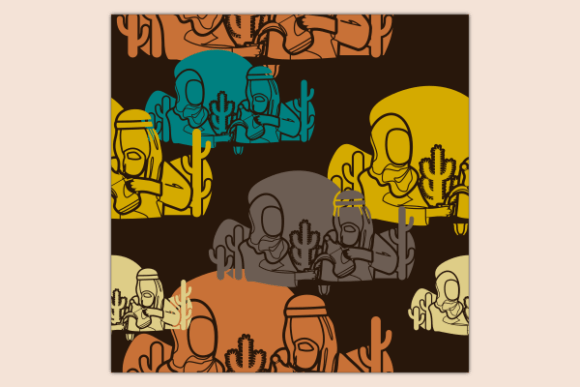
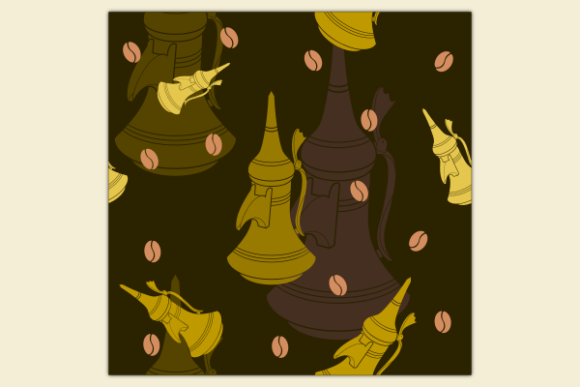
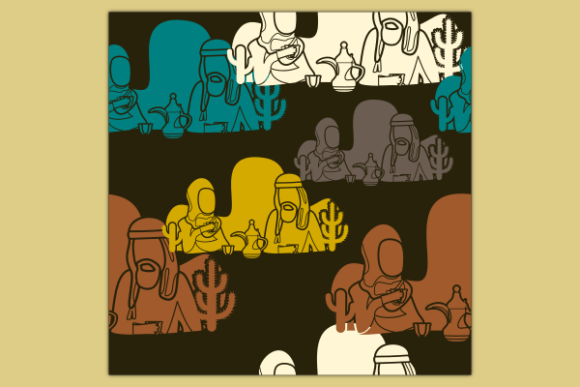
What struck me first was the monochrome treatment. Flat, unshaded, and deliberately restrained. An Arab couple sharing Arabic coffee, with a dallah pot and finjan cups worked into a seamless repeat, all sitting on a dark background. The silhouette approach feels intentional, almost like a modern homage to traditional motifs. For an embroidery designer, this kind of graphic clarity is a gift. There is no ambiguity about where one shape ends and another begins, which matters enormously when you start thinking about stitch paths and thread colors on dark fabric.
First Look at the Pattern's Personality
The mood is quiet, intimate, and grounded. The dark background anchors the design, and the flat monochrome figures give it a graphic, almost printmaking quality. I could see this working beautifully as a repeating pattern on a tote bag panel or as a single featured motif extracted from the seamless tile. The dallah pot curves elegantly, and the finjan cups are small but distinct. The couple's posture reads clearly even at a reduced scale, which is not always true with silhouette-style graphics. That readability matters when thread hits fabric.
Because the Arab Couple Having Coffee Dark Pattern is an editable SVG vector, the door opens for embroidery digitizers to isolate elements, scale specific portions, or reconfigure the layout entirely. I appreciate that flexibility. Not every pattern file gives you that kind of control without a fight. The seamless nature of the repeat also means you can tile it across larger project areas without awkward breaks, which is essential for anything beyond a small patch or coaster.
Real Project Test: The Tote Bag That Sold Out
Let me ground this in something real. A friend runs a small handmade boutique focusing on Middle Eastern and North African-inspired home goods. She needed a design for a canvas tote bag, something that felt authentic without being overly ornate. She wanted people to carry it to the farmer's market or the neighborhood coffee shop and have strangers ask where they got it. I pulled up Arab Couple Having Coffee Dark Pattern and showed her a mockup on natural cotton canvas. She ordered twelve bags before I finished explaining the stitch plan.
We ran the pattern as a centered panel on the front of each tote, roughly eight inches wide. The dark background of the design meant we had to think carefully about fabric color. On unbleached cotton, the contrast was sharp and satisfying. On black canvas, the design nearly disappeared, which taught me something important about this particular file. It thrives on light to medium fabric tones. The monochrome figures need a surface that lets them breathe. On dark or heavily textured fabrics, you lose the dallah pot's silhouette and the finjan cups become ghostly shapes that frustrate more than they charm.
The tote bags sold out within two weekends at a local craft fair. Customers kept picking them up, tracing the pattern with their fingers, and asking about the coffee tradition behind the image. That reaction told me everything I needed to know about the commercial viability of the design. It sparks conversation. In a handmade product, that is worth more than a dozen technically perfect stitches.
Where the Pattern Shines Brightest
Based on my testing and project experience, Arab Couple Having Coffee Dark Pattern performs exceptionally well on a specific set of products. The design naturally suits items connected to hospitality, relaxation, and cultural appreciation. Think about what Arabic coffee represents: welcoming guests, slowing down, sharing stories. That emotional resonance translates directly into product categories where people want to feel warmth and connection.
Pillow covers and cushion panels are the obvious starting point. The seamless repeat fills a square or rectangular surface without awkward cropping. Kitchen towels and linen napkins also work beautifully, especially when the pattern runs along a border rather than covering the entire surface. I have seen a test stitch on a flour sack towel that looked like it belonged in a high-end kitchen boutique. The monochrome aesthetic keeps it from feeling busy, even at a dense repeat.
For apparel decorators, sweatshirts and t-shirts offer a strong canvas. A single extracted motif from the pattern, scaled up as a chest print or back panel, creates a striking statement piece. The flat graphic style translates well to embroidery because it does not rely on subtle gradients that digitizing software struggles to interpret. You get clean edges, defined shapes, and a finished look that reads as intentional rather than simplified.
Smaller projects like embroidered patches, coasters, and mug rugs also benefit from the design's clarity. At reduced sizes, the finjan cups and dallah pot remain legible, which is the real test of any pattern that includes detailed cultural objects. I would not push the design below three inches in its full pattern form, but isolated elements could go smaller with careful digitizing adjustments.
Products That Need Extra Thought
Not every project is a natural fit. I learned this through trial and error, and I want to save you the fabric scraps and frustration. The Arab Couple Having Coffee Dark Pattern has a dark background built into the design file. That means any project on dark fabric, especially black or deep navy, will struggle to show the pattern clearly. You can invert the colors in the SVG before digitizing, which is a practical workaround, but the original dark background limits your fabric choices unless you are comfortable editing the vector file first.
Stretchy fabrics like performance tees, baby onesies, and thin jersey also present challenges. The seamless repeat has a density that can pull on lightweight knits if the stabilizer is not dialed in perfectly. I recommend a sturdy cutaway stabilizer and a topper if you are stitching on anything with a pile or texture, like fleece or terry cloth. The design's fine details, particularly around the finjan cups and the couple's hands, can get swallowed by fabric texture if you are not meticulous about stabilization.
Curved surfaces such as caps and hats require careful placement. The pattern's strength lies in its repeat logic, and breaking that repeat across a curved crown can look disjointed. I would extract a single motif for cap embroidery rather than trying to wrap the full pattern. Small hoop sizes also limit what you can achieve. A four-by-four hoop will only capture a fragment of the repeat, which might still work as a decorative accent but will not convey the full seamless effect that makes the pattern special.
Frequent washing is another consideration. If you are stitching on kitchen towels or apparel that will see heavy use, test the stitch density and thread choice early. The pattern's graphic nature means you want crisp, clean lines over time, not fuzzy edges that soften the silhouette into something unrecognizable. Polyester thread holds up better than rayon for items that will hit the washing machine regularly.
How the Design Shapes Customer Perception
There is a subtle but powerful dynamic at play when a customer picks up a product featuring Arab Couple Having Coffee Dark Pattern. The design signals thoughtfulness. It does not feel generic or mass-produced. People who recognize the dallah pot and finjan cups often pause and smile, and people who do not recognize them become curious. That curiosity leads to questions, which leads to engagement, which leads to sales. I have watched this happen in real time at craft fairs and boutique pop-ups.
From a branding perspective, the pattern adds a layer of cultural texture that elevates a simple product. A plain tote bag becomes a storytelling piece. A pillow cover becomes a conversation starter. This matters for small business owners and Etsy sellers who compete on uniqueness rather than price. The design gives you something to talk about in product descriptions, social media posts, and in-person selling situations. That narrative value is hard to quantify but impossible to ignore once you see it working.
Giftability also increases with this design. Products featuring the pattern feel personal and curated, even when produced in multiples. I have seen them used as wedding gifts, housewarming presents, and holiday items that resonate with recipients who appreciate Arabic coffee culture. The monochrome palette keeps the design versatile enough to fit into a range of home decor styles, from modern minimalist to bohemian eclectic.
Practical Studio Notes Before You Stitch
Every embroidery designer develops a mental checklist before committing thread to fabric. Here is what I run through when working with Arab Couple Having Coffee Dark Pattern, and what I recommend you consider before your first stitch-out.
- Run a scrap fabric test first. This is non-negotiable. The dark background and fine details interact differently with various fabric types, and you want to see the result before committing to a final product.
- Check thread color contrast. The monochrome look depends on strong contrast between the thread and the fabric. Test white, cream, or metallic gold thread on dark fabric if you invert the design, or use dark thread on light fabric to preserve the original mood.
- Review stitch density carefully. A seamless pattern can become dense quickly, especially where design elements overlap or repeat tightly. Too much density leads to stiff fabric and thread breaks. Too little loses the graphic impact.
- Confirm your hoop size before digitizing. The pattern's repeat logic means you need to plan how much of the design fits within your available hoop area. Scaling down too aggressively will lose the finjan cups and dallah pot details.
- Inspect small details in a test stitch. The couple's hands, the dallah pot's spout, and the finjan cups are small but essential to the design's identity. If these blur or disappear, the pattern loses its cultural specificity.
- Test the design in black and white mockups. Even though the original is monochrome, viewing it in a simplified black and white preview helps you spot areas where contrast might fail on certain fabric colors.
- Compare light and dark fabric backgrounds. The original dark background in the file means you should consciously choose your fabric base. Light canvas, natural linen, and cream cotton are your safest starting points.
- Use proper stabilizer for your fabric type. A cutaway stabilizer for knits, a tear-away for woven cotton, and a water-soluble topper for textured fabrics will save you from countless headaches.
- Verify licensing before selling finished items. The product description mentions the file is editable and can be used as a background, but you need to confirm the commercial license terms directly before listing products on Etsy, in a boutique, or at a craft fair.
- Check file compatibility with your digitizing software. The SVG format is widely supported, but confirm that your specific workflow accepts editable vector files and that the seamless repeat imports correctly without distortion.
When the Pattern Becomes a Product Line
One of the smartest ways to use Arab Couple Having Coffee Dark Pattern is to build a small product collection around it. Instead of a single tote bag or one pillow cover, think in sets. A kitchen towel paired with a matching coaster set. A tote bag with a coordinating zipper pouch. A sweatshirt alongside a baby onesie for a parent-child gift pairing. The seamless repeat creates visual consistency across different product types, which strengthens your brand presence at craft fairs and in online listings.
For Etsy sellers and digital product creators, this pattern also works as a printable mockup asset. The SVG format means you can use it in listing photos, branding materials, and social media previews. A cohesive visual identity across your shop builds trust with buyers who are scrolling quickly and making split-second decisions about which handmade item to purchase. The pattern's dark background and monochrome figures create a distinctive look that stands out in a sea of pastel and floral designs.
I have also seen designers use the pattern as a jumping-off point for color variations. The editable vector file lets you recolor the figures, swap the dark background for a lighter shade, or introduce subtle accent colors while keeping the silhouette style intact. This flexibility extends the design's life across multiple seasons, collections, and customer preferences without requiring a completely new file purchase.
Final Thread on the Spool
After testing Arab Couple Having Coffee Dark Pattern across several projects, from tote bags to pillow covers to small patches, I can say with confidence that this is a design that rewards thoughtful execution. It is not a grab-and-go file that works on every fabric in every hoop without adjustment. It asks you to think about contrast, scale, and stabilizer. But when you give it that attention, the results feel professional, culturally resonant, and commercially viable.
The pattern belongs in the toolkit of any embroidery designer, craft business owner, or handmade product seller who wants to offer something with meaning. It fills a gap in the market for designs that reference Arabic coffee culture with restraint and graphic elegance. Whether you are stitching a personalized gift, building inventory for a holiday market, or adding a new listing to your Etsy shop, this pattern gives you a foundation that feels both authentic and adaptable.
Test it on scrap fabric first. Dial in your thread choices. Choose your fabric base wisely. And then watch how customers respond when they see a dallah pot and finjan cups stitched cleanly onto something they can hold in their hands. That reaction is the real measure of a design's worth, and Arab Couple Having Coffee Dark Pattern delivers it.