Everything Happen for a Reason
I was recently asked to create a custom embroidered tote bag for a client’s mindfulness boutique. The brief was clear: they wanted a phrase that felt both personal and universal, something customers would carry with them long after the purchase. That’s when I opened the Everything Happen for a Reason design. As a designer who regularly reviews digital assets for embroidery use, I’ve learned that a beautiful graphic on screen doesn’t always translate into a beautiful stitch. This one, though, immediately had the kind of quiet confidence I look for in an inspirational piece.
The Mood of the Design: Why Words Matter in Embroidery
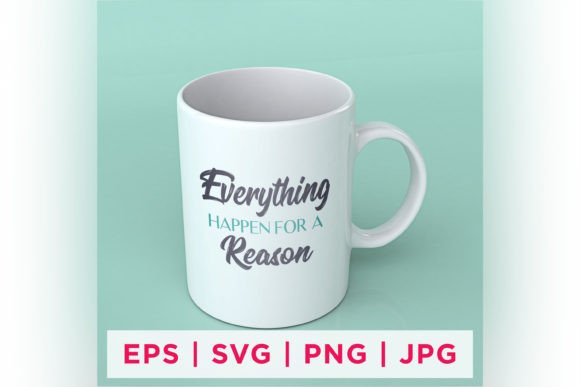
What struck me first was the message. It’s not a trendy slogan; it’s a gentle reminder that sits comfortably in the back of your mind. The layout feels like a hand-lettered thought, most likely a flowing script with intentional flourishes. The shape is horizontally balanced, which makes it a natural fit for a wide range of projects. There’s a softness in the way the letters likely connect, and the overall composition reads as calm rather than loud. For embroidery, that’s a huge advantage. A design that whispers instead of shouts often sells better on a handmade product because it appeals to customers who want something meaningful, not just decorative.
Seeing it as a Graphics asset in the Crafts category, I knew it was originally intended as a sticker design. The product description rightly points out that inspirational sticker designs are “catalysts for positive change and commercial development.” That idea translates beautifully to embroidery. When you stitch a phrase like this onto a finished product, you’re not just adding a design—you’re embedding a feeling. That emotional layer is what makes a simple tote bag or sweatshirt into a personalized gift someone will actually use.
A First Look at Shape and Visual Personality
The shape, likely a gentle arc or a clean straight baseline, dictates how it will sit on a garment. I always test how a design will look on a curved surface like a cap or a tote bag that slouches. From what I can see, Everything Happen for a Reason has a friendly, approachable personality. The lettering style probably balances thick downstrokes with thinner upstrokes, which is a classic calligraphy look. That’s encouraging because a well-digitized satin stitch can mirror that stroke variation beautifully, giving the embroidery a hand-painted feel. The overall detail level feels moderate—enough to be elegant, but not so intricate that you’ll lose clarity on textured fabric.
From Sticker to Stitch: Translating a Graphic for Machine Embroidery
This is where the real work begins. A digital sticker design is a flat image, but a machine embroidery design needs stitch types, underlay, and density information. Since this product is a graphic file, you’ll need to convert it into an embroidery file yourself or work with a digitizer. I always recommend that step, because not every beautiful curve on screen will translate well into a satin stitch or fill stitch without adjustments.
For a design like this, most of the lettering will likely be converted to satin stitch. The thin upstrokes could cause trouble if they’re too narrow; sensible digitizing will widen them slightly or switch to a running stitch for the finest lines. Any decorative accents—small dots, swooshes, or flourishes—might need a fill stitch or carefully placed satin columns. The stitch density has to be high enough to give solid coverage on dark fabric, but not so dense that it perforates the material or makes the design stiff. I always test my digitized version on scrap fabric first, and I’d urge anyone using Everything Happen for a Reason to do the same.
One thing I appreciate about this design is that it doesn’t rely on tiny, fussy details. The lettering is the star, and with a smooth, flowing script, the embroidery can look professional even on a small hoop size—provided the design is scaled appropriately. However, I’d hesitate to shrink it below 2.5 inches wide for a chest pocket or a baby bib, because the thin parts of the letters might start to close up. On a larger scale, say for the back of a denim jacket, the impact would be stunning.
Real Projects: Where ‘Everything Happen for a Reason’ Shines
I mentally test every design against a shortlist of common projects my clients ask for. Here’s how this one stacks up.
Tote Bags and Everyday Bags
This is where the design truly belongs. A natural canvas tote with a centered Everything Happen for a Reason embroidery in a soft thread color—think dusty rose, sage green, or warm charcoal—feels like a boutique product. The phrase instantly adds a handmade product charm that elevates a simple bag. I’ve already envisioned it as a bestseller for a craft business or an Etsy seller looking to add a mindful touch to their lineup. The stitch layout would be clean, with no awkward corners, and the design’s width suits a standard tote bag panel perfectly.
Sweatshirts and Apparel
For custom apparel, placement matters. A left-chest embroidery of this design on a cozy crewneck sweatshirt would feel intimate and wearable. On a t-shirt, I’d recommend a slightly larger placement across the front, maybe with a gentle curve. Sweatshirt embroidery demands a stable backing, and because the phrase is text-heavy, a medium-weight cutaway stabilizer is non-negotiable. The design’s simplicity means it won’t warp excessively on stretchy fabric, but you still need to hoop carefully. I’d avoid using it on extremely thin, drapey fabrics because the dense stitching might pucker.
Baby and Nursery Items
I’ve been asked before to embroider inspirational phrases on baby blankets, onesies, and nursery decor. Baby embroidery requires a gentle touch: low stitch density, soft thread, and a soft backing. The “Everything Happen for a Reason” message works beautifully for a birth announcement piece or a thoughtful personalized gift. However, I’d scale it down carefully and test on a similar fabric first. A tiny version on a baby cap or a tiny pillow cover could be adorable, but the letters must remain legible.
Caps, Aprons, and Home Décor
Embroidering on a curved cap brim is always a challenge. The horizontal nature of this phrase means it would fit best on the front panel of a structured cap, but you’d need to adjust the digitizing for the crown’s curve. An apron with this design stitched on the bib would feel instantly professional and warm, perfect for a small shop product or a holiday gift. For pillow covers and tea towels, the design adds a cozy, farmhouse-style sentiment. I’ve seen similar phrases sell well at craft fairs, especially when paired with simple floral accents.
Patches and Small Shop Merchandise
If you’re thinking of making an embroidered patch, this design is a strong candidate. A patch can be sewn onto jackets, backpacks, or even framed as a tiny art piece. The key is to digitize it with a clean edge, maybe a narrow satin border, and test how the patch holds up after washing. For a small shop product line, a patch format lets you offer the design on multiple items without rehooping entire garments.
Fabric and Placement: What Works and What Doesn’t
Not every surface is a friend to a text-based embroidery design. I’ve learned to be cautious with textured fabrics like terry cloth or loosely woven linen. The letters can sink into the pile, and even with a topper, you might lose the crispness that makes this design charming. On dark fabric, thread color contrast is critical. I’d test a few thread colors against a dark navy or black background to make sure the thin upstrokes remain visible. A metallic thread or a high-sheen polyester thread can give the message a subtle lift, but I’d keep it tasteful—nothing too flashy.
When stitching on stretchy fabric, like a slim-fit t-shirt or a baby onesie, use a fusible mesh stabilizer and hoop the fabric with care. The design’s length means it could distort if the fabric shifts during stitching. I’d also avoid placing it directly over a seam or a zipper, which can cause uneven stitch tension. For caps, the curved surface demands a special hoop and a digitized file that compensates for the arc. I’d recommend doing a test stitch on a similar cap blank before committing to a client order.
How This Design Affects Perceived Value and Customer Trust
Embroidered products with an inspirational message carry a unique weight. When a customer sees Everything Happen for a Reason neatly stitched on a tote bag design or a custom apparel piece, they immediately understand that the item was made with intention. That perception of care translates into higher perceived value. I’ve noticed that buyers are more likely to purchase a handmade product with a meaningful phrase, and they’re often willing to pay a premium for it.
From a brand consistency standpoint, this design is a safe bet. It’s versatile enough to blend into a boutique’s existing aesthetic without overpowering it. The message is universally positive, so it won’t alienate customers. For a craft business or an Etsy seller, using this design across multiple listings can create a cohesive collection. I’d even suggest pairing it with a simple floral or botanical applique design to add a custom touch without diluting the phrase.
Giftability is another strong point. I can easily picture this on a holiday embroidery item, a wedding gift, or a thoughtful present for someone going through a tough time. The phrase becomes part of the gift’s emotional value, and that’s something you can’t fake with a generic design.
However, buyer engagement hinges on stitch quality. If the letters are jagged or uneven, the design’s power evaporates. A customer will notice a poorly digitized letter faster than a missing stitch in a floral pattern. That’s why I always remind myself that the design’s strength is also its vulnerability: every stitch must be perfect.
Embroidery Designer’s Practical Checklist Before You Stitch
After years of testing hundreds of designs, I’ve developed a mental checklist that I run through before I ever load a hoop. Here’s my complete list for anyone planning to use Everything Happen for a Reason in a real project.
- Test on scrap fabric first. The same fabric you’ll use for the final product. This is non-negotiable.
- Check thread color contrast. View the design in black and white on your screen to see if the letters pop. A design that looks great in color may disappear in monochrome.
- Review stitch density. Is the design too dense for the fabric? Too sparse for coverage? Adjust before you stitch.
- Confirm hoop size. Measure the design’s dimensions and make sure it fits your available hoops. Don’t guess.
- Inspect the smallest details. Zoom in on the lettering and any flourishes. If a detail is thinner than 1mm, it may need to be thickened or removed.
- Test on both light and dark fabric backgrounds. A design that looks airy on white may look weak on black. Have a separate thread color plan for each.
- Use the right stabilizer. For apparel, a cutaway stabilizer is usually best. For tote bags, a tear-away with a fusible mesh adds security without bulk.
- Check licensing before selling. Since this is a digital graphic, verify that the license allows for commercial use on finished products. The product description hints at “commercial development,” but I always confirm the terms. If you’re creating digital embroidery files for resale, you need an extended license.
- Create a printable mockup. Before you stitch for a client, show them a digital preview on a product photo. This builds trust and prevents costly re-dos.
- Consider the design’s mood. Does it fit the product? A serious, reflective phrase on a baby bib might feel odd. Match the design’s tone to the item.
I’ve also found it helpful to stitch a small version of the design on a piece of felt and keep it as a reference sample. This lets me show customers exactly what to expect, and it’s a useful tool for my own quality control.
Final Thoughts: A Design That Carries Its Weight
After spending time with Everything Happen for a Reason, I’m convinced it’s one of those rare designs that does more than look pretty. It offers a genuine emotional hook that can turn a simple embroidered patch or tote bag design into a statement piece. For craft business owners, Etsy sellers, and small shop product creators, that’s a powerful advantage.
The only caution is that you must treat the digitizing step with respect. A graphic meant for Crafts and Graphics use isn’t automatically an embroidery-ready file. Invest the time to test and refine, and you’ll end up with a finished product that stitches cleanly, washes well, and sells itself. Whether you’re preparing a batch of custom apparel for a holiday market or making a single personalized gift for a friend, this design has the quiet strength to make an impact. It’s not just a sticker—it’s a feeling stitched in thread.