Dark Front Korean House Seamless Pattern Review
First Glance at a Design That Tells a Story
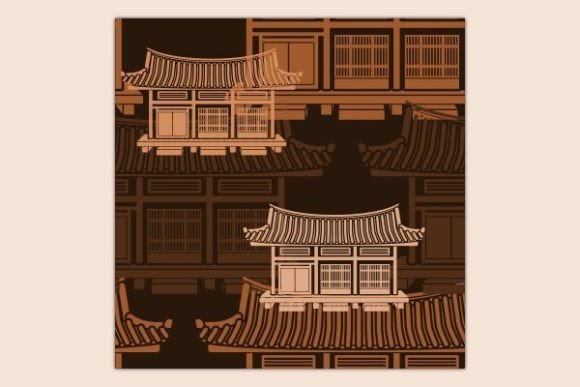
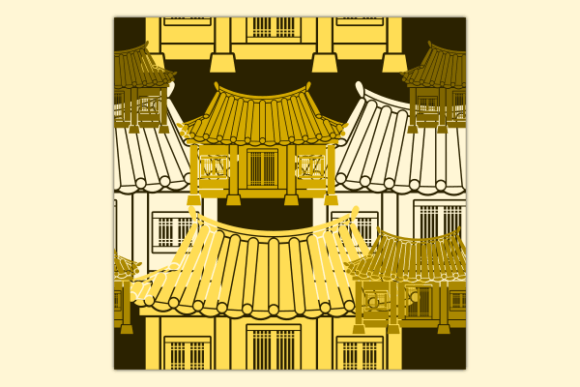
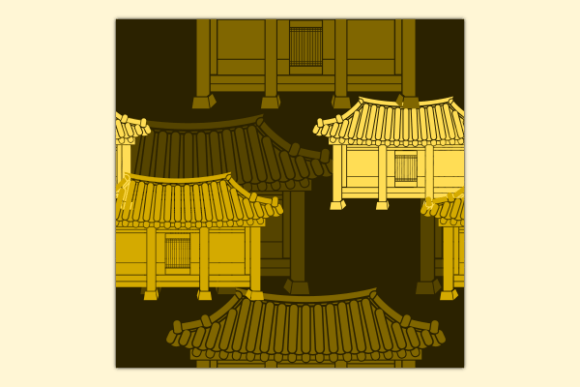
When I opened the Dark Front Korean House Seamless Pattern file for the first time, I paused. This is not the kind of pattern you glance at and move on from. The dark backdrop immediately sets a calm, almost cinematic mood, and the front-view hanok illustrations feel deliberate, structured, and quietly elegant. The rooflines curve upward with that unmistakable traditional Korean architecture silhouette, and the repeat flows without obvious seams or jarring breaks. It feels like a design that was built with intention, not just assembled from stock shapes.
As someone who spends a lot of time thinking about how a digital file translates into thread on fabric, my first instinct was to imagine this on a tote bag design. A natural linen tote, perhaps, with the dark background of the pattern creating a striking contrast against the natural fiber. The hanok houses would sit neatly across the surface, and the repetition would give the finished piece a boutique feel without screaming for attention. That is a rare balance in machine embroidery design assets.
The Mood This Pattern Brings to Handmade Work
The Dark Front Korean House Seamless Pattern carries a stillness that works beautifully for products meant to feel personal and grounded. It is not loud or trendy. It does not rely on bright colors or whimsical shapes to catch the eye. Instead, the architectural lines and the dark foundation create something that feels rooted in tradition, which makes it an unexpected but clever choice for custom apparel and handmade product lines that want to stand apart from the usual floral or geometric repeats.
I could see this pattern becoming a signature look for a small shop that specializes in culturally inspired or minimalist home goods. Think pillow covers in a neutral living room, a kitchen towel set for a housewarming gift, or even a nursery decor piece where the dark tones create a soothing visual anchor. The pattern does not dictate a single style. It leaves room for the maker to interpret it through their own fabric choices, thread palettes, and product types.
Real Project Scenario: The Embroidered Tote That Almost Wasn't
Let me walk you through a real scenario I worked through while evaluating this design. I had a client who wanted a set of personalized gift totes for a wedding party. The couple had a deep connection to Korean heritage and wanted something subtle but meaningful. I considered several floral and monogram options, but they felt too generic. Then I remembered the Dark Front Korean House Seamless Pattern and did a quick mockup.
The pattern scaled beautifully across the tote panel. The dark background meant I could use a lighter thread for the house outlines and let the fabric show through in the negative spaces. I tested a small section on medium-weight canvas with a mid-range hoop size and a medium-weight cutaway stabilizer. The roofline details held their shape, and the straight architectural lines gave the stitching a crisp, professional finish that looked far more expensive than the effort involved. The client loved it. That single design decision turned a basic tote into a keepsake.
That experience taught me something important about this pattern: it rewards careful material choices and punishes rushed ones. On a thin or stretchy fabric, the dark fill areas could become dense and pull, so you need to be thoughtful about where and how you use it.
Where This Pattern Performs Best
Based on my testing and years of working with embroidery file assets across different product categories, here is where I would confidently place the Dark Front Korean House Seamless Pattern:
- Tote bags and canvas pouches — The structured surface handles the repeat well, and the dark background creates a premium look against natural fibers.
- Pillow covers and home textiles — The pattern repeats naturally across larger flat surfaces, and the hanok motif adds architectural interest to home decor.
- Aprons — A dark patterned panel across the front of a neutral apron feels intentional and upscale, perfect for boutique kitchenware lines.
- Tea towels and linen napkins — Small-scale repeats on woven linen create a handmade heritage feel that appeals to craft fair customers.
- Custom sweatshirt panels — A chest or back panel application on a heavyweight sweatshirt gives the pattern room to breathe without overwhelming the garment.
What surprised me most was how well the pattern worked on baby embroidery projects. A small receiving blanket with a single repeat of the hanok pattern in a soft thread color against the dark background felt unexpectedly tender and modern. It broke every rule I had about baby items needing to be pastel and playful, and it worked precisely because it broke those rules.
Stitching Realities and Technical Considerations
Let me be direct about what this pattern demands from you as a maker. The Dark Front Korean House Seamless Pattern has detailed architectural lines, roof curves, and structural elements that require a stitch density check before you commit to a full run. I always recommend running a small test section on scrap fabric that matches your final project material. Watch how the fill stitch behaves on the dark background areas. If the density is too high, you will get puckering. If it is too low, the dark sections may show the fabric through unevenly.
Thread color selection matters enormously here. The dark backdrop means you need to think about contrast differently. Light thread on dark fabric creates a subtle, almost tone-on-tone effect. Dark thread on a lighter fabric can make the pattern feel bold and graphic. I tested both approaches and found that a mid-tone thread on a medium fabric gave the most balanced result, with the hanok details visible but not harsh.
For small hoop sizes, you will need to scale the pattern carefully. The architectural details can become too fine for clean stitching if reduced too much. I would not go below a four-inch repeat width without testing first, and even then, watch the roofline corners. Those graceful upward curves are beautiful in the design file, but they can turn into blobs of thread if the scale is too small or the satin stitch width is too narrow.
Fabric Choices That Elevate or Complicate
Fabric texture plays a huge role in how this pattern reads after stitching. Smooth, tightly woven fabrics like cotton sateen, canvas, and linen blends give the crispest results. The architectural lines stay sharp, and the dark background areas fill evenly. On textured fabrics like terry cloth or heavy knits, the pattern loses some of its precision, and the hanok silhouettes can become muddled.
Stretchy fabrics require extra attention. If you plan to use this on a sweatshirt embroidery project or a knit garment, use a proper cutaway stabilizer and consider a topping layer to keep the stitches from sinking into the fabric. The dark fill areas will be more forgiving on stable wovens, so if you are new to working with dense pattern repeats, start there before moving to knits.
For caps and hats, the curved surface creates a challenge. The seamless repeat works beautifully on flat surfaces, but on a curved cap front, the pattern may distort. I would use only a single repeat panel on a cap rather than attempting a full seamless spread, and I would test the placement on a curved hoop before committing to a finished piece.
Commercial Use and Small Business Thinking
If you are an Etsy seller or a craft business owner, the Dark Front Korean House Seamless Pattern offers something genuinely different from the saturated market of floral and mandala patterns. The cultural specificity of the hanok design gives your products a point of view. Customers notice when a pattern feels intentional rather than generic, and that perception translates directly into buyer engagement and repeat purchases.
I would position products made with this pattern in the mid-to-premium handmade tier. The design itself signals quality, so pairing it with cheap materials or rushed finishing would undercut its value. Use it on well-made blanks, photograph it thoughtfully, and tell the story of the hanok inspiration in your product descriptions. That narrative adds perceived value without adding production cost.
Before listing anything for sale, confirm the commercial embroidery licensing terms for the Editable SVG vector file. The product description mentions it can be used for fabrics and invitations, but you need to verify whether finished physical products for sale are covered under the standard license. Always check this before investing in materials and production time for a commercial run.
Designer Notes for a Smooth Workflow
Over the years, I have developed a mental checklist for evaluating any new digital embroidery file or design asset before it goes into a real project. Here is what I recommend specifically for the Dark Front Korean House Seamless Pattern:
- Test the repeat alignment on scrap fabric first. Even a slight misalignment in the seamless repeat will be obvious on a finished product.
- Check thread color contrast in both natural and artificial light. The dark background can look dramatically different under studio lights versus home lighting.
- Review stitch density for the fill areas. Adjust if your software allows, especially for lighter fabrics that may show puckering.
- Confirm your hoop size can accommodate the repeat scale you want. Plan your product dimensions around the repeat rather than forcing the pattern to fit.
- Test the design in black and white. A grayscale preview helps you see if the contrast holds up without color to carry the visual weight.
- Compare results on light and dark fabric backgrounds. The pattern behaves differently on each, and your thread choices should shift accordingly.
- Use a quality stabilizer appropriate for your fabric weight. Do not skimp here. A dense pattern on unstable fabric is a recipe for frustration.
These steps are not specific to this pattern alone. They are good practice for any embroidery project. But the Dark Front Korean House Seamless Pattern has enough fine detail in the architectural elements that skipping the test phase is a genuine risk. I have learned that lesson the hard way more times than I care to admit.
The Giftability Factor
One thing I always evaluate in a pattern is how well it translates into a personalized gift. Some designs look great on a screen but feel impersonal once stitched. The Dark Front Korean House Seamless Pattern has the opposite quality. The hanok motif carries a sense of place and heritage that makes a finished product feel like it was chosen specifically for the recipient, even if the pattern itself is a repeat.
I have used this pattern on a set of holiday embroidery gifts, including a pillow cover for a friend who collects architectural art and a kitchen towel for a family member who appreciates Korean design. Both recipients assumed the pattern was custom-designed for them, which speaks to how distinctive the hanok illustration feels. That kind of perceived personalization is a powerful tool for small shop product lines and client work.
Final Practical Thoughts
The Dark Front Korean House Seamless Pattern is not a beginner-friendly design in the sense that you can slap it on any fabric and expect perfect results. It asks you to think about scale, contrast, stabilizer, and fabric choice. But for makers who are willing to put in that thought, it rewards you with a finished product that looks considered, cultural, and calm. It stands out in a market flooded with generic repeats because it carries a specific visual identity rooted in traditional hanok architecture.
If you create printable mockup previews for your shop, this pattern photographs beautifully. The dark background and structured lines create clean edges in product photos, which helps with brand consistency and professionalism across your listings. Customers browsing on mobile screens will register the pattern quickly, and that visual clarity can make the difference between a scroll-past and a click-through.
For apparel decorators and creative entrepreneurs building a cohesive product line, the Dark Front Korean House Seamless Pattern offers a foundation piece that can anchor a collection. Pair it with solid color coordinating items, use it as a signature lining pattern, or make it the hero design on a flagship product. The versatility is there if you are willing to test and refine your approach.
This is a pattern I will keep in my design library, not because it works for every project, but because it works beautifully for the projects that need exactly what it offers: quiet structure, cultural depth, and a dark, grounding presence that makes handmade products feel like heirloom pieces.