Christmas Bell Seamless: A Designer's Project Review
The First Look That Stops You Mid-Scroll
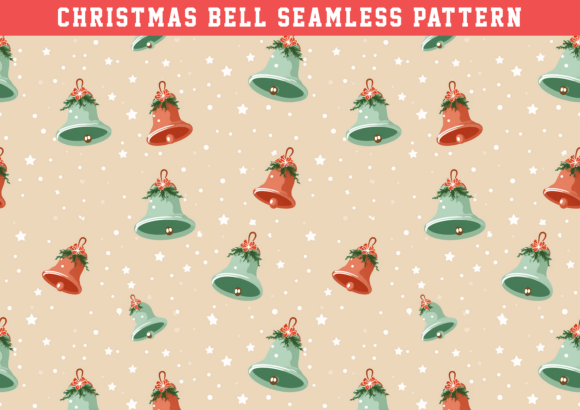
When I opened the zip file and saw the Christmas Bell Seamless graphic at full resolution, my first thought was not about pixels or DPI. It was about how the bell shapes would read on a cream linen pillow cover I had been planning for a client's holiday collection. The 2000x2000px JPG at 300 DPI gives you room to breathe. You can zoom in, inspect the curves, and actually visualize how the motif would translate once you bring it into your digitizing software or use it as a surface pattern reference for an embroidery layout.
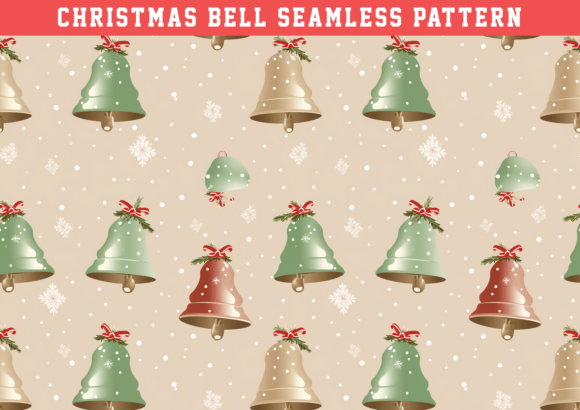
The seamless nature of this design is what makes it genuinely useful for an embroidery designer. You are not locked into a single isolated motif. Instead, you get a continuous pattern that can be cropped, repeated, rotated, or selectively extracted depending on what your project needs. The bells are rendered with a classic holiday silhouette, and the spacing between them feels natural rather than forced. That matters when you are building a product meant to feel handmade, not mass-produced.
Mood, Shape, and the Personality of the Design
The Christmas Bell Seamless pattern carries a nostalgic warmth without tipping into outdated clip-art territory. The bell shapes are rounded and friendly, with subtle curves that suggest movement. There is a gentle rhythm to the repeat that makes the pattern feel balanced whether you are looking at a small swatch or a full yard of fabric. For embroidery, this kind of visual rhythm is valuable because it helps you predict how the design will behave across different product sizes.
The absence of a watermark on the file is a practical relief. You can drop the graphic straight into a mockup, a digitizing preview, or a product listing image without cleaning up distractions. As someone who has spent too many late nights cloning out watermarks from sample files, I appreciate that small but significant detail.
Where This Pattern Truly Belongs
If I had to pick one project where Christmas Bell Seamless would feel most at home, it would be a set of embroidered kitchen towels for a holiday market booth. The pattern lends itself beautifully to border designs along the hem of a flour sack towel. Because the motif is seamless, you can extend the bell pattern horizontally across the towel edge without awkward breaks. Stitched in a deep cranberry red thread on natural cotton, the bells would read clearly and feel festive without being loud.
Beyond kitchen linens, I can see this working well on:
- Embroidered tote bags with a repeating border detail near the top or bottom
- Pillow covers where the pattern fills the center panel or wraps around the flange
- Apron bibs that need a cheerful holiday accent without overwhelming the entire garment
- Baby onesies where a single bell can be isolated from the seamless repeat and placed as a small chest motif
- Fabric gift wrap or drawstring bags that become part of the present itself
- Caps and hats where a curved arrangement of bells follows the brim line
Each of these applications leverages the seamless quality of the graphic in a different way. The key is recognizing that you are not stuck with the full repeat. You can extract, scale, and adapt.
Thinking Through Stitch Translation
Here is where the designer brain kicks in. A JPG graphic is not an embroidery file, and anyone who has been in this craft long enough knows that a beautiful digital pattern does not always stitch beautifully without thoughtful digitizing. The Christmas Bell Seamless design, with its smooth curves and clean silhouettes, gives you a strong starting point. The bell shapes are distinct enough that a well-digitized satin stitch outline would hold the form nicely. For the interior details, a light fill stitch with a subtle texture could mimic the gentle shading visible in the graphic.
If you are digitizing this for a machine embroidery design file, pay attention to the scale. At smaller sizes, the curves between bells could tighten up and create dense stitch areas that are hard to hoop cleanly. I would recommend testing the design at the intended finished size on a scrap of the exact fabric you plan to use for the final product. A densely stitched bell pattern on a thin cotton voile, for example, is going to behave very differently than the same stitchout on a sturdy canvas tote.
The Real Project That Came to Mind
Last week, a customer asked me about creating a personalized holiday gift set for her boutique. She wanted something that felt cohesive across a tote bag, a matching zipper pouch, and a small embroidered patch she could sew onto a cardigan. I pulled up the Christmas Bell Seamless file and started mentally placing the bells across each item.
For the tote bag, I pictured a horizontal band of bells running across the front pocket, stitched in a matte gold thread that would contrast warmly against a deep navy canvas. For the zipper pouch, a smaller-scale repeat of the same bells along the bottom edge. And for the patch, I isolated a single bell from the pattern, enlarged it slightly, and envisioned it stitched with a combination of satin stitch borders and a light fill, then finished with a merrowed edge. The seamless file made it possible to maintain visual consistency across all three items while adapting the scale and placement to each product. That kind of design flexibility is what turns a good product line into a memorable one.
Fabric, Texture, and the Honest Limits
Not every fabric is going to be kind to this pattern. Textured fabrics like heavy waffle weave or thick terry cloth can distort the bell shapes, especially if the motif is digitized at a small scale. Dark fabrics are another consideration. If you are stitching the bells in a light thread color on a dark background, the contrast will be strong, but any fabric show-through between stitches becomes more noticeable. A darker thread on a dark fabric, on the other hand, might lose the definition of the bell silhouette entirely.
Stretchy fabrics demand extra attention. If you are planning to embroider this pattern onto a sweatshirt or a knit baby blanket, a good cutaway stabilizer is non-negotiable. The seamless repeat pattern, if used across a large area, can create significant stitch density. Without proper stabilization, the fabric will pucker, and the bells will look warped after the first wash. I have learned that lesson the hard way on a set of otherwise lovely holiday sweatshirts.
Curved surfaces like caps also require careful placement. The seamless pattern looks best when it follows a gentle arc, but the bell shapes can distort if the curve is too tight. Test the placement on a curved embroidery field before committing to a full production run.
Small Hoop Realities
If you are working with a smaller embroidery hoop, the full seamless repeat may not fit as a single hooping. This is not a dealbreaker, but it is something to plan for. You can isolate a section of the pattern, stitch it, rehoop, and continue the repeat. The seamless nature of the design actually helps here because the pattern connections are smooth and forgiving. However, alignment is critical. A misaligned repeat on a tote bag or pillow cover is visible and undermines the professional look of the finished product.
For small hoop users, I recommend focusing on single-bell motifs extracted from the pattern or using a short repeat section that fits comfortably within your hoop dimensions. This is also a practical approach for baby items, patches, and cap embroidery where the available stitching area is limited.
Customer Perception and Product Value
When a customer picks up a handmade item with an embroidered design, they are not just looking at the stitches. They are responding to the visual personality of the pattern. Christmas Bell Seamless has a classic, approachable quality that reads as thoughtful rather than trendy. That matters for holiday products because customers often buy them as gifts. A design that feels timeless will appeal to a broader range of recipients, from a grandmother who loves traditional decor to a younger friend who appreciates handmade charm.
The seamless pattern also adds a perception of quality. When a repeat pattern flows naturally across a product, it signals that the maker paid attention to detail. The customer may not consciously notice the seamless repeat, but they will notice if the pattern breaks awkwardly or looks disjointed. This design helps you avoid that problem.
Practical Designer Notes Before You Start Stitching
Over the years, I have developed a checklist of things to verify before using any digital design asset in an embroidery project. Here is what I would recommend for the Christmas Bell Seamless file:
- Test on scrap fabric first. The fabric you plan to use for the final product should be the same fabric you test on. Do not rely on a test on cotton broadcloth if your final product is a linen blend.
- Check thread color contrast. The bells have a defined silhouette in the graphic, but your thread choices will determine whether that silhouette holds up in stitch form. Consider testing a few thread color combinations on small swatches.
- Review stitch density. If you are digitizing the pattern yourself, pay attention to how the stitch density translates across the repeat. Overly dense areas can make the fabric stiff and uncomfortable, especially on apparel.
- Confirm your hoop size. Measure the repeat dimensions against your available hoop space. If you need to rehoop for a larger pattern, plan your alignment marks carefully.
- Inspect the small details. Zoom in on the graphic at full resolution and look for any subtle curves or connections that might get lost at a reduced stitch size. The 2000x2000px resolution at 300 DPI gives you plenty of clarity for this inspection.
- Test in black and white. Converting the pattern to grayscale can help you evaluate how the contrast and shapes will read without the distraction of color. This is especially useful for planning stitchouts on fabrics with different background tones.
- Use proper stabilizer. Match the stabilizer to the fabric and the stitch density of the design. A lightweight tearaway might work for a simple outline, but a dense fill pattern on a garment will need something more substantial.
- Check licensing terms. The product description does not specify usage rights, so confirm with the seller whether the file can be used for commercial embroidery projects, finished products for sale, or digital product creation before you invest time in digitizing and production.
When This Pattern Makes the Most Sense for Your Business
For Etsy sellers, craft fair vendors, and small shop owners, the Christmas Bell Seamless graphic offers a solid foundation for building a cohesive holiday product line. Because the pattern is seamless, you can use it across multiple product types while maintaining a consistent brand look. A customer who sees your embroidered tea towel at a market might also recognize the same bell pattern on a matching apron or a set of napkins. That recognition builds trust and encourages multiple purchases.
For digital product sellers, the high-resolution JPG file can serve as a base for creating printable mockups, design previews, or pattern templates that you can bundle with other holiday assets. Just be sure to verify the licensing permissions before incorporating the graphic into products you plan to sell as digital downloads.
The Final Stitch Check
What I appreciate most about the Christmas Bell Seamless design is that it does not overpromise. It is a clean, well-constructed seamless pattern with a classic holiday motif, delivered at a resolution that gives you practical flexibility. It is not a stitch file, and it does not pretend to be one. That honesty matters when you are evaluating a Graphics asset in a Patterns category for real embroidery work.
If you are willing to put in the digitizing work and test thoughtfully, this pattern can become the visual anchor for a holiday collection that feels cohesive, professional, and genuinely handmade. Whether you are stitching a single bell on a baby onesie or running a full repeat across a set of pillow covers, the design holds up. And when a customer unwraps that finished product and runs their fingers over the stitches, they will feel the care that went into it. That is the whole point of what we do.